
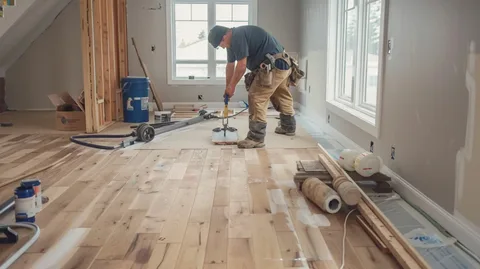
The moment you decide to replace tired carpet or cracked tile with real hardwood, the internet floods you with numbers that feel too good to be true. Some corners of the web still claim you can have hardwood installed for six or seven dollars per square foot. By the time the job finishes in the final weeks of 2025, almost everyone discovers the real range starts closer to eleven dollars and climbs toward twenty-five or higher when every detail is done correctly. Understanding where every dollar actually goes is the difference between loving your floors for decades and regretting the project before the first scratch appears.
Material Costs: What the Wood Itself Demands Today
Cost of install hardwood floor remains the benchmark. Standard 3/4-inch solid red or white oak in 2-1/4 to 5-inch widths now begins around six dollars per square foot at wholesale yards and reaches nine dollars retail for select-grade material. Move to 7-inch or wider planks and the same species jumps past eleven dollars before a single nail is driven. European white oak, prized for stability and minimal knots, rarely dips below ten dollars and frequently exceeds sixteen for long-length rift-and-quarter packages. Engineered flooring with legitimate 4mm to 6mm wear layers offers the only consistent path under nine dollars, with premium lines from reputable mills landing between seven and thirteen dollars depending on thickness and veneer quality.
Labor Rates That Refuse to Stay Still
Installer wages and overhead have risen faster than lumber in the past three years. A qualified two-person crew in most metropolitan areas now commands ninety to one hundred forty dollars per hour total. An average day sees two hundred to three hundred square feet of nail-down solid or click-lock engineered completed when everything goes perfectly. That translates to four to seven dollars per square foot in labor alone for straightforward rooms. Glue-down installations over concrete routinely double the time required, pushing labor toward ten to fourteen dollars per square foot. Master craftsmen who layout complicated patterns or restore century-old subfloors charge even more and stay booked months ahead.
Removal and Disposal Realities Homeowners Never Budget
Existing flooring must disappear before new hardwood arrives. Simple carpet and padding removal adds one to two dollars per square foot nationwide. Old hardwood glued to concrete demands grinding that costs eight to fifteen dollars per square foot plus dust containment. Tile or sheet vinyl from the 1980s or earlier triggers asbestos testing and potential abatement that begins at four thousand dollars for even small areas. Disposal fees themselves have doubled since 2022 in many municipalities because landfills charge by weight and hardwood is heavy. Many contractors now quote demolition completely separate from installation because surprises lurk under every layer.
Subfloor Preparation: The Foundation You Cannot See but Always Pay For
New homes sometimes deliver perfectly flat subfloors. Older homes almost never do. Leveling concrete with self-leveling compound costs roughly two dollars per square foot for every eighth of an inch corrected. Plywood replacement over joists runs twenty to thirty dollars per sheet plus labor to sister or reinforce weak areas. Moisture mitigation systems for basements or slab-on-grade homes add two to five dollars per square foot for vapor barriers and sealants. Soundproofing underlayment required in condominiums and second-story apartments pushes another one to three dollars everywhere. Skipping any of these steps saves money today and creates noise, movement, or failure tomorrow.
Transitions, Trims, and Details That Quietly Explode Budgets
Straight runs through open rooms represent the fantasy of online calculators. Real hardwood floor repair contain fireplaces that require custom scribing, angled walls that demand rip cuts, and hallways that refuse to align perfectly. Every doorway transition to tile or carpet needs reducer strips or T-moldings. Stairs with hardwood treads and risers cost two hundred to four hundred dollars per step when material and labor combine. Herringbone, chevron, or border patterns easily add ten to twenty dollars per square foot in the rooms where they appear. Under-cutting door jambs and casings so planks slide underneath instead of ending abruptly adds hours most homeowners never notice until they see the line item.
Finishing Options That Swing the Total More Than Most Wood Choices
Prefinished flooring remains the budget champion because sanding and coating happened at the factory. Site-finished raw wood requires multiple sanding passes, staining, and three or more coats of finish applied inside your home. Traditional oil-modified polyurethane adds four to six dollars per square foot. Modern waterborne finishes with superior durability and zero ambering push toward seven to nine dollars. Hard-wax oil finishes beloved for their natural feel demand hand application and buffing that begins at ten dollars per square foot. Adding ceramic or aluminum-oxide topcoats for commercial-level scratch resistance can exceed twelve dollars in finishing alone.
Regional Variations and Market Forces Still at Play in Late 2025
Geography continues to punish or reward. Coastal metropolitan areas where construction never paused face installer shortages that drive total installed costs toward twenty to twenty-eight dollars per square foot for solid wide-plank white oak. Smaller cities and rural regions sometimes hold at eleven to sixteen dollars total when local crews remain available. Imported engineered products have stabilized after years of container shortages, but domestic solid lumber still fluctuates with logging restrictions and storm damage in key growing regions. The same floor from the same manufacturer can vary twenty-five percent within a single state depending on which distributor serves the contractor.
The Long View: Why Spending More Up Front Almost Always Costs Less Forever
Floors installed correctly in 2025 become fifty-year assets. Corners cut on acclimation create gaps that never close. Inadequate subfloor work produces squeaks that drive families crazy. Rushed finishing scratches within months instead of decades. Homeowners who choose mid-tier materials and top-tier installation consistently report higher satisfaction ten years later than those who chased the lowest bid. Real estate professionals confirm that quality hardwood returns more at resale than the premium ever cost. When calculated as cost per year of beauty and function, the higher invoice often proves to be the true bargain.
The final number on the contract reflects every decision made from the first showroom visit to the moment the crew sweeps up the last sawdust. Materials establish the baseline, but preparation, craftsmanship, and finishing determine whether those boards become the heart of your home or an expensive lesson. Homeowners who understand the real cost to install hardwood floors before signing anything walk across their finished floors barefoot with zero regrets, knowing the price of forever was paid once and paid right.


