
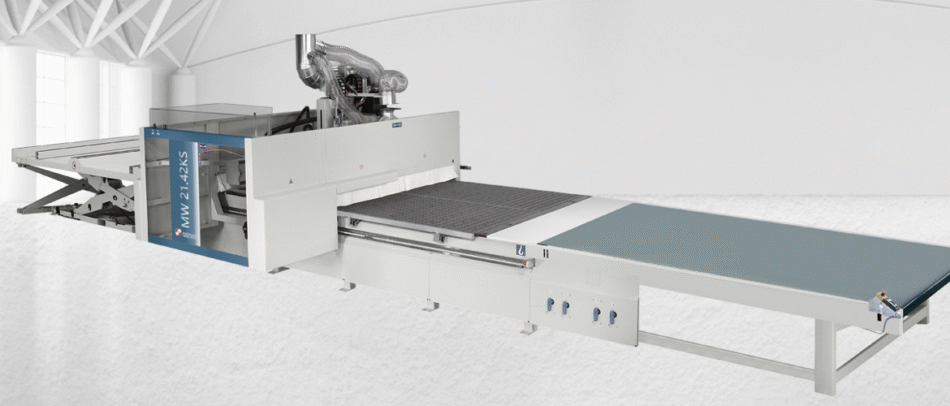
Choosing the right CNC machine is one of the most important decisions for any woodworking or joinery workshop in Australia. The right model can transform how a business operates improving accuracy, reducing waste, and cutting production time dramatically.
As demand for custom cabinetry, detailed joinery, and precision furniture continues to grow, many workshops are upgrading from manual tools to CNC systems. However, not every machine fits every workshop. The wrong choice can lead to wasted space, higher costs, and poor efficiency.
Also, Australian workshops face unique challenges from limited floor space to specific power requirements and environmental conditions. That’s why selecting a CNC machine built for Australian conditions, with local service and support, is critical for long-term success.
In this article, we’ll explain how to choose the right CNC machine model for your workshop in Australia. We’ll cover what features matter most, how to match machine size to your workload, and how to find reliable local suppliers who can support your business beyond the sale.
Understand Your Workshop’s Needs and Production Scale
Before buying a CNC machine, it’s essential to understand exactly what your workshop needs. Every business operates differently, and the right model depends on your production goals, available space, and the type of work you handle daily.
Start by looking at what kind of jobs you do most often. If you mainly produce custom cabinetry or one-off furniture pieces, a compact or mid-size CNC router may be enough. These models handle detailed work efficiently without taking up too much floor space. However, if you manage high-volume production like kitchen panels or commercial fit-outs, a larger nesting CNC machine will give better results and faster output.
Also, think about your production scale and material size. The sheet size you work with should match your machine’s bed dimensions. Standard 8×4-foot or 10×5-foot beds suit most Australian workshops, but it’s best to check that your material fits comfortably with room for hold-down clamps or vacuum zones.
As you know, Australian workshops have unique considerations. Power supply, space, and dust extraction are all critical. Some CNC machines require three-phase power, so you’ll need to confirm that your site supports it. Good ventilation and dust management keep the workspace clean and help the machine run efficiently.
Finally, assess your team’s experience and workflow. A CNC machine should simplify production, not complicate it. Choose a model that fits smoothly into your current process, with software your team can learn quickly.
Understanding your needs upfront ensures you buy a CNC machine that’s productive from day one and continues to meet your business goals as your workshop grows.
Key Features to Consider in a CNC Machine Australia
Once you understand your workshop’s needs, the next step is knowing what features to look for in a CNC machine. The right features make all the difference between a smooth-running operation and ongoing frustration.
Start with build quality. A solid steel frame ensures the machine stays stable during cutting and routing. This prevents vibration, which can affect accuracy and surface finish. In Australia, where many workshops run long hours, a strong build helps the machine stay reliable for years.
Next, look at spindle power. The spindle is the heart of the CNC machine. A spindle between 9 kW and 12 kW gives enough strength to cut solid timber, MDF, and composite materials cleanly. A high-quality spindle also lasts longer and runs more quietly.
Another critical feature is the vacuum hold-down table. This keeps the material firmly in place during cutting, so there’s no movement or shifting. For workshops using large sheets, multi-zone vacuum systems provide more control and better results.
Also, make sure your CNC machine supports software compatibility. It should connect easily with programs such as Cabinet Vision, Mozaik, or AutoCAD. This ensures a quick design-to-cut process and helps reduce programming errors.
As you know, automation-ready options can future-proof your investment. Machines with automatic tool changers, material loading, or unloading systems save time and allow you to scale production later without major upgrades.
Finally, check for local service and parts support. Suppliers like Tuckwell Machinery provide installation, training, and maintenance within Australia, which helps avoid long downtime and costly delays.
Choosing a CNC machine with these features ensures accuracy, reliability, and strong performance for any woodworking or joinery business in Australia.
Budgeting and Total Cost of Ownership for a CNC Machine in Australia
Buying a CNC machine is a major investment, so understanding the full cost of ownership helps you make the right financial decision. The price of the machine is only part of the total expense. You must also plan for setup, training, maintenance, and future upgrades.
Start by considering the purchase price. In Australia, small CNC routers can start around $25,000, while large production models may exceed $150,000. The cost depends on the machine size, spindle power, automation features, and brand reputation.
Next, include installation and setup costs. Many suppliers handle delivery and installation, but some sites may require electrical upgrades or layout changes to accommodate the machine safely. Planning for these expenses avoids surprises later.
Also, factor in training and software costs. As you know, the machine is only as effective as the operator running it. Investing in proper training ensures your team can use the CNC system efficiently from day one. Some suppliers include training with purchase, while others charge separately.
Maintenance is another key part of ownership. Budget for routine servicing, replacement tools, and parts. Regular maintenance helps extend the life of your CNC machine and keeps performance consistent. Local support, such as that offered by Tuckwell Machinery, can reduce downtime and repair costs over time.
Finally, think about the return on investment (ROI). CNC machines often pay for themselves within two to three years by saving on labor, reducing waste, and improving output. The more your machine runs, the faster you recover your initial cost.
Owning a CNC machine in Australia is not just about the upfront price. It’s about planning for long-term efficiency, predictable costs, and consistent profit growth.
Choosing Reliable Suppliers and Local Support in Australia
Finding the right supplier is just as important as choosing the right CNC machine. A trusted local supplier not only provides the equipment but also ensures it runs smoothly for years through reliable service, training, and spare parts.
Start by researching suppliers with proven experience in the Australian woodworking and joinery market. Look for companies that understand local workshop needs, such as space limitations, power requirements, and production styles. Suppliers like Tuckwell Machinery specialize in machines suited to Australian conditions and offer complete setup assistance.
Next, check what kind of after-sales support each supplier offers. A good supplier should provide installation, operator training, and ongoing maintenance. They should also have local technicians who can visit your site quickly when needed. Long waiting times for overseas support can cause serious production delays.
Also, ask about spare parts availability. Machines that use standard components or have parts stocked locally are easier and cheaper to maintain. This is especially important in regional areas of Australia, where shipping delays can affect deadlines.
Before committing, request a live demonstration. Seeing the machine in action gives you a clear idea of its speed, noise level, and cut quality. Many reputable suppliers will let you bring your own materials or design files to test the machine’s performance in real-world conditions.
As you know, warranty terms are another critical factor. Read them carefully to understand what’s covered and for how long. Choose suppliers that stand behind their products with clear warranty support and service guarantees.
A reliable supplier partnership ensures your CNC machine remains productive, accurate, and profitable for years, giving your workshop a lasting competitive edge.
Decision Path: Steps to Choose the Right Model
Choosing the right CNC machine for your workshop is easier when you follow a clear step-by-step process. This helps you avoid common mistakes and ensures the machine fits your needs from day one.
Step 1: Define your production goals.
Start by identifying what you want the CNC machine to achieve. Are you focusing on custom joinery, cabinetry, or large-scale production? The type of work you do will determine the right bed size, spindle power, and software requirements.
Step 2: List the key features you need.
Create a checklist that includes essentials such as a strong frame, high spindle power, vacuum hold-down, and automatic tool changer. Also include software compatibility and dust extraction. This list will help you filter out models that don’t match your workflow.
Step 3: Visit suppliers and test machines.
As you know, nothing replaces hands-on testing. Visit local suppliers and ask for live demonstrations. Bring your own design files or materials to see how the machine performs. This is the best way to gauge speed, accuracy, and ease of use.
Step 4: Compare suppliers carefully.
Look beyond price alone. Check for local service support, warranty coverage, training programs, and availability of spare parts. A slightly higher upfront cost is worth it if the supplier offers strong long-term support.
Step 5: Plan your layout and training.
Before installation, plan your floor space, power connections, and dust collection setup. Schedule staff training in advance so production starts smoothly.
Step 6: Think about future upgrades.
Choose a CNC machine that allows expansion. Some models can later add automation features like automatic loading or advanced tool changers, saving you from future replacement costs.
By following these steps, you can confidently choose a CNC machine that fits your workshop’s current operations and supports your long-term growth in the Australian market.
Common Mistakes to Avoid When Buying a CNC Machine in Australia
Buying a CNC machine is a big step for any workshop, and avoiding common mistakes can save time, money, and frustration. Many first-time buyers focus only on price or size, but there are other factors that make a real difference in day-to-day use.
1. Buying the wrong machine size.
One of the most common mistakes is choosing a machine that’s too small or too large for your actual work. A smaller CNC might limit the size of panels you can cut, while an oversized one wastes floor space and adds unnecessary cost. Always match the machine size to your current and near-future workload.
2. Ignoring software compatibility.
As you know, the machine’s hardware is only half of the setup. If your CNC doesn’t integrate smoothly with your design software, you’ll spend more time fixing files than cutting materials. Make sure the machine supports popular Australian programs like Cabinet Vision or Mozaik before purchase.
3. Overlooking operator training.
Even experienced woodworkers need training to use a CNC machine effectively. Skipping training can lead to programming errors, wasted material, and costly downtime. Choose a supplier that offers on-site training and support.
4. Neglecting local service and parts availability.
Relying on overseas suppliers for repairs can cause long delays. Local service means faster response times and easy access to spare parts. Suppliers like Tuckwell Machinery make ongoing support simple and reliable for Australian workshops.
5. Focusing only on the lowest price.
The cheapest option is rarely the best. Lower-cost machines often lack essential features, durability, or warranty support. A slightly higher upfront investment usually provides better long-term value through reliability and productivity.
6. Forgetting to plan workshop layout and power needs.
Installing a CNC machine without preparing your space can lead to workflow issues. Check for proper power supply, dust extraction, and material handling areas before installation.
Avoiding these mistakes ensures your CNC investment delivers lasting results and keeps your workshop running efficiently for years.
Conclusion
Choosing the right CNC machine in Australia is more than a purchase decision. It’s a long-term investment that determines how efficiently your workshop operates, how much you produce, and how profitable your business becomes.
By understanding your production goals, space, and workflow, you can select a model that fits perfectly with your daily operations. Machines built with a solid frame, reliable spindle, vacuum hold-down, and compatible software ensure precision, speed, and consistent performance.
Also, working with a trusted local supplier such as Tuckwell Machinery helps remove the guesswork. Local support, training, and ready access to parts make ownership easier and more cost-effective in the long run.
As we know, a CNC machine should simplify work, not complicate it. Choosing wisely means your workshop can deliver custom joinery, cabinetry, or large-scale production faster and with better accuracy.
In the end, the right CNC machine helps Australian workshops reach the next level of productivity and precision. It’s not just about buying equipment it’s about building a smarter, more efficient future for your business.


