
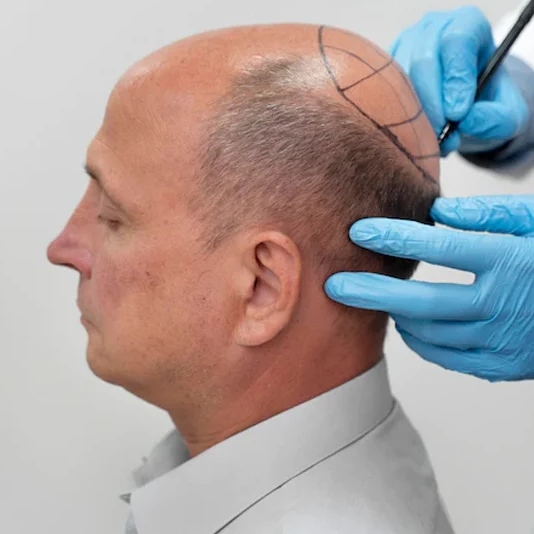
For many men, hair thinning or baldness at the crown (top/back) region of the scalp can be a major source of concern. The “crown” — sometimes called the vertex — is often one of the first areas to show visible signs of hair loss. Crown Hair Transplant in Abu Dhabi has become a viable option for men seeking to regain fullness and restore confidence. This article explores what crown hair restoration involves, who it’s suitable for, what to expect, and how to approach the decision thoughtfully.
What Is Crown Area Hair Restoration
Crown hair restoration refers to procedures designed to re‑establish hair density at the crown region of the scalp — the top/back area that commonly experiences thinning or balding patterns. Instead of focusing on the hairline at the front of the scalp, this treatment targets the crown’s unique bald or thinning spot. The goal is to implant healthy hair follicles to rebuild coverage and recreate a natural look that blends well with existing hair.
Because the crown often involves a swirl or circular hair growth pattern, restoring hair there requires careful planning to ensure direction and density look natural. The aim is to make the crown appear full enough so that thinning or bare spots are no longer obvious, giving a balanced and natural overall hair appearance.
Why Men in Abu Dhabi Choose Crown Restoration
Men in Abu Dhabi (and elsewhere) often turn to crown restoration when hair loss becomes noticeable at the vertex region. The reasons vary — genetic male‑pattern hair loss, aging, stress, or other factors. What makes crown restoration attractive is that it concentrates on the area of concern, avoiding unnecessary intervention in unaffected scalp regions.
For men who don’t have widespread hair loss but suffer from localized thinning at the crown, crown restoration can deliver impactful results by redistributing hairs where they are most needed. It allows for targeted treatment instead of full‑scalp procedures, often meaning less extensive grafting and a more focused outcome.
Additionally, modern hair restoration techniques offer relatively efficient recovery and gradual regrowth, which appeals to men with busy lifestyles who want to restore hair without massive disruption.
Common Techniques Used for Crown Restoration
Several hair restoration techniques are commonly used for crown restoration. The choice depends on factors such as the extent of thinning, donor hair availability, and personal preferences.
-
Follicular Unit Extraction (FUE): This method extracts individual hair follicles from donor areas (often the sides or back of the scalp) and implants them into the crown region. FUE is popular because it avoids large scars and allows for flexible, gradual grafting.
-
Strip‑Based Transplantation (FUT or strip method): A strip of scalp is taken and divided into grafts for transplanting. This can provide a larger number of grafts in one session, which may be useful if the crown area is significantly thin or bald.
-
Direct Implant Techniques: There are refined transplant techniques that focus on precise graft placement, aligning hair direction with the natural swirl of the crown to create a realistic appearance.
Each method has its advantages. For instance, FUE is preferred by many because of minimal scarring and relatively quick recovery, while other methods may be considered when a larger graft yield is needed. The technique must match the individual’s hair pattern, donor supply, and long‑term hair goals.
Who Is a Good Candidate for Crown Restoration
Crown hair restoration is most suitable for men who:
-
Have thinning or bald patches concentrated at the crown/vertex rather than across the entire scalp.
-
Possess adequate donor hair in areas like the back or sides of the head.
-
Prefer a targeted restoration rather than a full‑scalp transplant.
-
Have realistic expectations about results, understanding that crown restoration aims to improve density and coverage rather than recreate a completely thick scalp as if hair never thinned.
-
Are in generally good health and willing to follow recommended care before and after the procedure.
It is especially effective when hair loss is stable (not rapidly spreading) and when the donor supply is sufficient. Planning with care helps ensure that transplanted hair blends naturally with existing hair and growth patterns.
What to Expect from the Restoration Process
Before undergoing crown restoration, individuals typically have a consultation to assess hair loss pattern, donor hair availability, and scalp condition. Based on that evaluation, a suitable method and graft plan is proposed.
During the transplant session, healthy follicles are harvested and implanted into the crown area. Placement is done carefully to mimic natural hair growth direction and density. The procedure aims for a balanced, natural outcome rather than an overly dense crown that looks artificial.
After the procedure, transplanted follicles gradually settle and begin new hair growth. Over time — often several months — the crown starts to regain hair density. Because hair grows in cycles, full results may take time, and progressive improvement is normal.
Regular follow-up and proper aftercare help ensure that transplanted follicles thrive and integrate seamlessly with existing hair. The ultimate goal is a crown that looks naturally full, matches hair patterns, and blends in with the rest of the scalp.
Limitations and Considerations for Crown Restoration
The crown area presents unique challenges compared to other scalp regions:
-
The natural swirl and direction of hair at the crown means graft placement needs high skill and careful planning to avoid unnatural appearance.
-
Sometimes, achieving very high density may be difficult, especially if donor hair is limited. Restoring moderate to natural-looking density is often more realistic than recreating a “full head” of hair.
-
Hair loss may continue beyond the crown in other areas over time, which might affect the overall appearance and require future touch-ups or broader treatment.
-
Success depends heavily on donor hair quality and proper graft handling and placement.
Because of these factors, having realistic expectations and seeking a personalized, well-thought-out plan is crucial for satisfactory results.
What Results to Expect and When
Results from a crown restoration generally emerge gradually. In many cases:
-
Early growth may become visible after a few months as transplanted follicles take root and start producing hair.
-
Hair density and coverage often improve by six to twelve months, offering noticeably fuller appearance in the crown region.
-
The final look — with natural blending, proper hair direction, and restored coverage — usually becomes apparent after several months to a year depending on individual growth cycles and graft count.
With proper planning, the restored crown can significantly boost overall hair appearance and help regain confidence without overhauling the entire scalp.
Setting Realistic Expectations
It’s important to understand that crown restoration aims to improve hair density — not necessarily restore a youthful full scalp. The result should look natural and proportionate, not overly dense or artificial. Men opting for crown restoration should have realistic expectations about what is possible given donor hair supply, scalp condition, and the extent of hair loss.
The procedure should be tailored to individual hair characteristics, donor quality, scalp health, and long‑term maintenance plan. A thoughtful, conservative approach often leads to more satisfying and natural‑looking results.
Why Abu Dhabi Can Be a Good Location for Crown Restoration
Abu Dhabi offers access to modern hair restoration techniques and provides men with options to address localized hair loss such as crown thinning. The availability of services tailored to crown restoration allows individuals to focus only on the affected area without unnecessary treatment of unaffected scalp regions.
For men concerned about appearance and seeking a balance between effectiveness and practicality, crown restoration in a city like Abu Dhabi provides a convenient and practical opportunity. With the right evaluation and realistic grooming expectations, many find that crown restoration meets their needs for improved hair density and renewed confidence.
Frequently Asked Questions
Can crown restoration work if only the crown is thinning and other scalp areas are fine?
Yes — crown restoration is especially suited for cases where hair loss is limited to the crown. It allows for targeted treatment without affecting unaffected parts of the scalp.
Does the hair in the crown region grow naturally after transplant?
Yes. Transplanted follicles, once properly placed, grow just like natural hair and blend with existing hair as long as graft placement is done carefully.
Is crown hair restoration suitable if my donor hair is limited?
Possibly — but suitability depends on the availability and quality of donor hair from the back or sides of the scalp. A proper assessment is essential to determine if there are enough follicles for effective coverage.
Will the restored crown look unnatural or overly dense?
Not if the procedure is planned well. The goal is to create natural density and proper hair direction, not to overfill. Realistic planning helps ensure a natural outcome.
How long until I see visible improvement after the procedure?
Some growth may begin in a few months, but more noticeable density and fullness usually become visible between six to twelve months, sometimes longer depending on individual growth cycles.
Do I need to treat other parts of the scalp too, or can I focus only on the crown?
If hair loss is limited to the crown, you can focus solely on that region. Comprehensive treatment of unaffected areas is not necessary unless hair loss progresses.


