
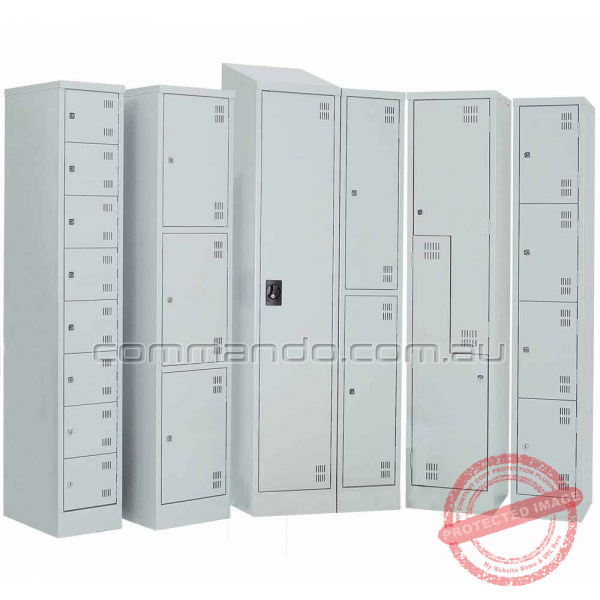
The need for storage has changed, and so have the demands for security, durability and peace of mind. Whether they’re purchased for workplaces, schools, gyms, warehouses, transport terminals, or hospitals, steel lockers are expected to do more than just store personal belongings; they must also protect them. Theft, privacy and security are more critical than ever before in the workplace. It’s why the right locker should have a range of enhanced security features.
Digital locking options for greater control
Old-school padlocks and keyways are not necessarily going away anytime soon, but they have their drawbacks. Keys are lost, combinations are shared, and locks are easily cut. The evolution of digital locking systems and management software offers higher levels of security and easier access for users and administrators.
Keypad entry, RFID cards, Bluetooth connections, biometric fingerprint scanners, or smartphone-app-enabled lockers now allow a company to track usage and control who has access to the locker system and at what times. These features also enable companies to update or revoke access in real time and keep keys from falling into the wrong hands. Since electronic locks don’t physically wear out from use, they are the best option for high-traffic facilities and for areas where compliance or digital access records are necessary for auditing and reporting.
Anti-theft hinges for critical support
A common method of breaching a locker is to yank, force, or remove the hinges. Creating anti-theft hinges welded from the inside and removing visible screws on the outside are now making it more difficult for intruders to use this method of entry.
Flush or concealed hinges keep tools and pry bars from reaching valuable items on the inside. For industrial facilities or public access areas, continuous piano hinges help reinforce the entire length of the door, and welded hinges add extra strength at potential leverage points. Besides reducing theft, these design features will keep lockers working smoothly for years, even with heavy daily use.
Sturdier doors for added safety
As the most visible and handled component of a locker, the door is the most common point a would-be thief will try to gain access through force. Reinforcing the door makes lockers more resistant to forced entry. Thicker gauge steel, double-walled doors, or additional bracing on the inside of the door can disperse pressure and make doors much more difficult to compromise.
Design elements such as vandal-proof louvres, impact-resistant door frames, and reinforced corners enhance durability. For high-security needs, some manufacturers now have ribbed doors or extra supports on the lock side. Both of these reinforce the door and make it much more difficult to pry or kick in. Units with these features are less likely to warp, dent, or loosen over time, and they help keep maintenance and replacement costs down.
Tamper-resistant construction materials
Of course, thicker steel is not the only aspect of a tamper-resistant locker. Improved engineering in general and corrosion-resistant, powder-coated options will help ensure integrity is maintained even in harsh or outdoor environments. Better, more secure fasteners, recessed locking cams and hasps, and doors that fit flush to the surface, help remove external parts that might otherwise be targeted by vandals. Tamper-proof screws and rivets that can only be removed with special tools are additional countermeasures against manipulation.
Internal features that boost security
Security also includes protecting the contents locked within. Adjustable shelves and personal compartments, name plates, and optional drawer dividers help keep contents separated and secure. Internal organisation means there is less incentive for users to overload lockers or slam doors shut, which can affect door latches and overall durability. Internal design is also a factor in utilising space efficiently. Locker sizes can be designed to work with their users, especially in workplaces that store a combination of items such as electronics, paperwork, tools, or personal protective equipment (PPE).
Safe ventilation for lockers
Older models used to have large ventilation holes that could actually be used as access points to reach inside. Newer models have smaller, more closely spaced vents that provide better cross-flow of air without exposing stored items to potential theft.
Lockers with laser-cut ventilation or ventilation through the back wall also prevent musty odours without compromising the durability or privacy that is desired in locker rooms for gyms, schools or factories.
Modular units and security features that scale with need
Different workspaces have different risks, and not every user has the same security and safety needs. That is why modular lockers with customisable features are becoming popular with companies of all sizes. Biometric and RFID locker locking options are best for high-traffic public areas, while mechanical combination locks are sufficient in lower-risk staff areas. With more flexible systems, businesses can keep spending within budget and upgrade to higher-security options if they are needed.
Lockers were initially designed only as storage units. However, now they are being used as a security system, which is customised according to the needs of a storage area. Digital locking systems, anti-theft hinges, extra-strong doors and tamper-proof materials are just some of the features available, which ensure belongings are secured, a facility remains neat and you have a trusted storage system.


