
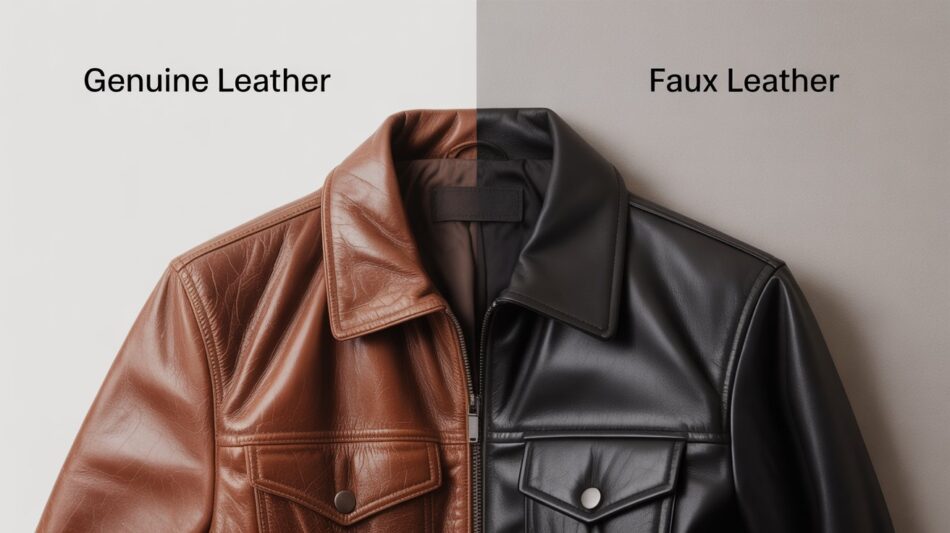
Most people buy the wrong leather jacket because they don’t know one simple truth — not all leather is real, and not all faux leather is bad.
After working with thousands of customers at The Falcon Jackets, we’ve seen everything — from riders who wore the same genuine jacket for a decade to fashion lovers whose faux leather jacket started peeling after one season.
If you’re about to buy a leather jacket, this guide will help you make the right choice — not based on hype or looks, but on comfort, durability, and long-term value.
Genuine Leather vs Faux Leather — The Core Difference
Genuine leather jackets are made from animal hide, typically cowhide, sheepskin, or goatskin. Each type has unique texture, flexibility, and weight.
Faux leather jackets, on the other hand, are made from synthetic materials like polyurethane (PU) or polyvinyl chloride (PVC). They imitate real leather’s look and texture but don’t have the same breathability or aging quality.
In short:
-
Genuine leather = natural, durable, ages beautifully.
-
Faux leather = affordable, low maintenance, not as long-lasting.
Key Things to Look for Before You Buy
1. The Smell Test — Genuine Leather Has a Natural Aroma
Real leather smells earthy and organic. Faux leather smells chemical or plastic-like due to synthetic coating.
If it smells too “perfect,” it’s likely fake.
2. The Touch & Texture — Feel the Grain
Genuine leather feels uneven, soft, and warm to touch.
Faux leather feels smooth, stiff, or cold.
Real leather also develops a natural patina (a sheen that improves with age), while faux leather surface stays static and can crack over time.
3. The Price — Real Leather Costs More for a Reason
A high-quality genuine leather jacket typically starts from $200–$600, depending on the leather type.
Faux leather jackets are usually priced under $150.
If the price seems too good for a “real leather” jacket, it probably isn’t.
4. The Label — Check for “100% Genuine Leather” or “PU Leather”
Always check the care or material label inside the jacket.
-
“Genuine leather, top-grain, or full-grain” = real.
-
“PU leather, vegan leather, or synthetic leather” = faux.
5. The Weight — Real Leather Feels Substantial
Real leather jackets weigh more because the material is denser and thicker. Faux leather is light and flexible but lacks the same body and structure.
6. The Wrinkle Test — Flexibility Tells the Truth
Bend the sleeve or collar.
-
Real leather wrinkles slightly and returns to shape.
-
Faux leather stays flat or shows hard creases.
7. The Stitching & Hardware — Small Details Reveal Quality
At The Falcon Jackets, we always advise customers to inspect the stitching, zippers, and lining.
-
Strong, tight stitching = better craftsmanship.
-
YKK zippers = reliability.
-
Thin lining or loose threads = short lifespan.
Real Leather: Advantages and Drawbacks
✅ Pros
-
Durability: Lasts 10+ years with care.
-
Aging: Looks better with time.
-
Breathability: Allows airflow — no stickiness.
-
Natural feel: Every piece is unique in texture.
❌ Cons
-
Price: More expensive upfront.
-
Maintenance: Requires conditioning every 6–12 months.
-
Sensitive to moisture: Needs proper storage and care.
Faux Leather: Advantages and Drawbacks
✅ Pros
-
Affordable: Great entry option for budget buyers.
-
Vegan-friendly: Made without animal hide.
-
Easy to clean: Wipe with a damp cloth — no conditioner needed.
-
Lightweight: Comfortable for short-term use.
❌ Cons
-
Short lifespan: Usually lasts 1–3 years.
-
Peeling risk: Surface cracks under sunlight or heat.
-
Non-breathable: Traps heat and moisture.
-
Plastic smell and feel: Lacks authentic texture.
The Material Breakdown — What’s Best for You
| Leather Type | Source | Texture | Durability | Best For |
|---|---|---|---|---|
| Cowhide | Cow skin | Thick, rugged | Very high | Riders, daily wear |
| Sheepskin | Sheep hide | Soft, flexible | Medium | Lightweight, casual jackets |
| Goatskin | Goat hide | Pebbled, durable | High | Military or utility jackets |
| PU (Faux) | Plastic + textile | Smooth, uniform | Low | Fashion wear, short-term |
| PVC (Faux) | Vinyl + textile | Glossy, stiff | Low | Costumes or trend pieces |
When to Choose Genuine Leather
Choose genuine leather if you want a jacket that:
-
You’ll wear for years, not seasons.
-
Gains character and style with time.
-
Can handle real weather, travel, and riding.
It’s a long-term investment that becomes a personal signature piece.
When to Choose Faux Leather
Choose faux leather if you:
-
Want an affordable, trendy option.
-
Don’t plan to wear it frequently.
-
Prefer vegan or cruelty-free products.
-
Live in mild climates where durability isn’t critical.
It’s great for short-term fashion or experimental looks.
Real Buyer Mistakes (and How to Avoid Them)
-
Buying cheap “real leather” online — always check product details.
-
Ignoring care instructions — don’t store your jacket in plastic.
-
Choosing the wrong fit — leather stretches slightly over time; pick a snug fit.
-
Confusing top-grain with genuine leather — top-grain is higher quality.
-
Skipping lining inspection — good lining = longer jacket life.
Expert Tip from The Falcon Jackets
Never choose by looks alone.
A $100 faux jacket might look great at first — but a $300 genuine leather jacket will outlast it five times over and age into something truly yours.
At The Falcon Jackets, we use premium hides, reinforced seams, and tested zippers to make sure your jacket not only looks good but lives long.
FAQs — Genuine Leather vs Faux Leather
1. How can I tell if a leather jacket is truly genuine leather?
Smell and texture reveal the truth. Real leather smells earthy and feels irregular, while faux leather smells synthetic and feels too smooth.
2. Which is more durable — genuine leather or faux leather?
Genuine leather is 3–5 times more durable and can last over a decade if maintained properly. Faux leather typically lasts 1–3 years.
3. What trade-offs should I expect with faux leather?
You save money upfront but lose longevity, comfort, and natural texture. Faux leather tends to peel and overheat faster.
4. What features or specs should I inspect when buying a leather jacket?
Check the material label, weight, zippers, stitching, and lining. Real leather feels heavier, has tight seams, and uses premium hardware.
5. Is genuine leather worth the extra cost versus faux leather?
Yes — if you plan to wear it long-term. Genuine leather’s comfort, durability, and timeless appeal easily justify its higher price.
Why Trust The Falcon Jackets
At The Falcon Jackets, leather isn’t just material — it’s craftsmanship, passion, and a promise.
Our team has worked with real leather artisans for over a decade, testing and refining every design for strength, comfort, and style.
We don’t recommend what’s trendy.
We recommend what lasts.
Final Word
A genuine leather jacket is a lifetime piece, not a seasonal purchase.
Faux leather has its place — for affordability, variety, and fashion.
But if you value authenticity, texture, and longevity, genuine leather is the only material that tells your story — and keeps getting better every year.
That’s why at The Falcon Jackets, we still believe in real leather — because it never goes out of style.


