
Watching someone you love slowly drift away is like trying to catch smoke with your hands—intangible, heartbreaking, and impossible to fully grasp until you’re in the midst of it. For Lynn Wenger, that journey became a reality when his wife Wendy was diagnosed with Alzheimer’s in 2019. This story is not just about disease—it’s about love, endurance, faith, and the small human moments that define us.
1. Who is Lynn Wenger?
Lynn Wenger was raised on a hog farm in Iowa, but his life took him far beyond the farm fields. He studied construction engineering and built a career in project management. He met Wendy when he was 29, married a year later, and together they raised children and later grandchildren.
But even all his professional experience—change orders, contracts, designing systems—couldn’t prepare him for the hardest job of his life: caring for someone he loved deeply as Alzheimer’s stole her memories.
2. Wendy’s Alzheimer’s Diagnosis
In 2019, doctors diagnosed Wendy with Alzheimer’s. What started as small misses—forgotten words, missed appointments—quickly added up. The kind of Alzheimer’s Wendy had meant that over time, her memories, her ability to stay present, and even small daily tasks would become harder. Lynn saw the woman he married gradually slipping away, not just in body, but in mind.
3. From Engineer to Full-Time Caregiver
Lynn’s background as an engineer and project manager gave him structure, discipline, and a way with words—but none of those things could exactly tell him what to do when Alzheimer’s enters a marriage. Still, he took what he knew: how to plan, how to communicate, how to stay calm under pressure. He made caring for Wendy his priority—learning medical terminology, adjusting their home, balancing family life, and providing emotional support.
Being a caregiver meant facing uncertainty every day, making small decisions that matter (medications, meals, routines), often without roadmap. The journey tested every measure of love he had.
4. What Alzheimer’s Is: A Gentle Explanation
If Alzheimer’s were a story, it might start with a slow blur. At first, the edges are soft. A forgotten name, a misplaced key—but gradually, parts of the picture fade. Alzheimer’s disease is a neurological condition that affects memory, thinking, behavior, and the ability to carry out everyday tasks. Over time, the brain’s connections weaken, and even the familiar becomes strange.
It’s not just forgetting—it’s losing pieces of one’s self, bit by bit. For those who love someone with Alzheimer’s, it’s like trying to hold onto something slipping through your fingers.
5. Daily Struggles & Small Victories
Some days, simple things become mountains: a shower, putting on clothes, or finding the right word. But within those challenges, there are moments of grace—a smile, a shared laugh, fingers intertwined, even if Wendy doesn’t remember who Lynn is in that moment.
Small victories matter: a peaceful day, a song that triggers a memory, a calm meal together. Lynn’s story shows us that these tiny lights—though fleeting—shine brightest when everything else feels dim.
6. Memories, Photos, and the Power of Remembrance
Memories are like images in a photo album—some vivid, others fading. Lynn’s site shows Memories—images, photos, and reflections—holding onto what Alzheimer’s tries to take away.
These artifacts—pictures, stories, daily journal entries—become anchors. Even when Wendy can’t recall recent events, she can still feel love, familiarity, and belonging. For Lynn, this preservation is sacred. These memories keep Wendy alive in many ways.
7. The Book: A Husband’s Memoir: A Journey Through Alzheimer’s
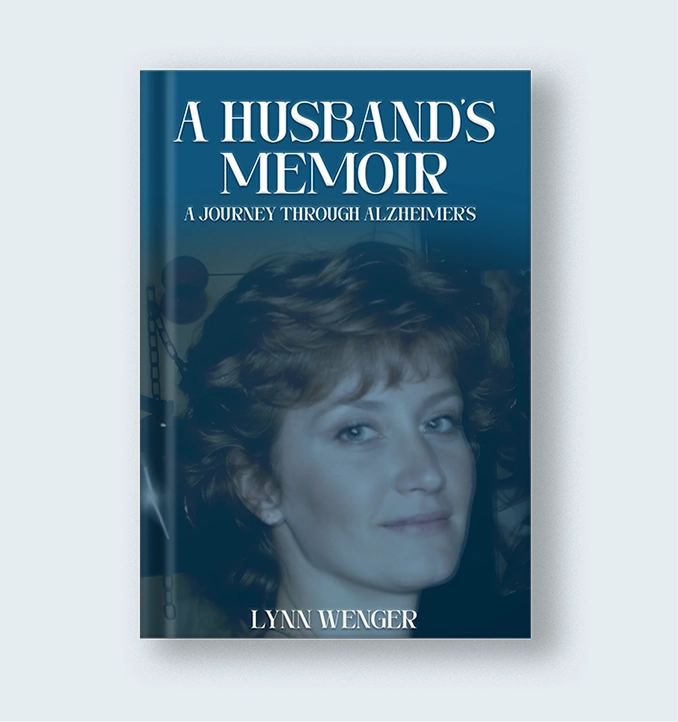
Lynn authored a book titled A Husband’s Memoir: A Journey Through Alzheimer’s, chronicling Wendy’s six-year battle with the disease and his journey alongside it.
In this memoir, Lynn doesn’t just describe the decline—he gives voice to his own grief, hope, fears, and unwavering love. It’s a love story—but also a testimonial: “this is what Alzheimer’s looks like; this is what caring can mean.”
8. Family, Faith, and Support System
Wendy and Lynn’s life together included children, grandchildren, friends—people who witnessed the challenge, offered care, and shared burdens. Lynn’s history—watching his own father care for his mother after a stroke—had prepared him, in part, for life as a caregiver.
Faith, too, has its place: in believing in purpose even when answers are scarce; in leaning on hope when the road gets dark. Lynn’s network—family, faith community, readers—gave him strength.
9. Coping Mechanisms and Self-Care
Caring for someone with Alzheimer’s means you must also care for yourself—though it’s hard. Lynn found solace in writing, reflection, perhaps moments of solitude, and the rituals of daily life. Keeping a routine, seeking support, allowing oneself to feel grief, anger, love—all of this helps.
Without self-care, love can become heavy to carry. Lynn’s process shows how preserving one’s own spirit becomes a way to keep giving.
10. Legacy, Hope, and What He Wants Us to Learn
What does Lynn want people to take away from his story? Maybe that love doesn’t end when memory does. That caring is not always heroic, sometimes it’s messy, exhausting, and full of doubts. But despite everything, love remains.
He hopes his memoir and his truth can offer hope to others in similar situations: that they’re not alone; that beauty can live in struggle; that memories—once shared—never truly vanish.
11. How Others Can Help Someone in a Similar Situation
- Listen and show up. Sometimes presence matters more than words.
- Offer concrete help. Cook meals, run errands, help with caregiving tasks.
- Be patient. Alzheimer’s is unpredictable. One day might be better, another worse.
- Share stories. Reading Lynn’s memoir or hearing his blog can offer empathy.
- Support caregivers. They carry hidden burdens. Speak kindness. Offer rest.
12. Final Reflections on Love, Loss, and Resilience
Lynn Wenger Alzheimer’s journey is not just about disease—it’s a mirror of what it means to love deeply, to face loss, and choose hope anyway. Wendy’s Alzheimer’s may have changed their life’s story, but it didn’t erase the love, the laughter, or the purpose.
In the end, Lynn’s path reminds us: even when memory fades, love leaves its mark. Even when the lights go dim, there’s still warmth. And even when we can’t predict tomorrow, faith in today’s moments strengthens us.
FAQs
1. What inspired Lynn Wenger to write A Husband’s Memoir: A Journey Through Alzheimer’s?
Lynn was inspired by his love for Wendy and his wish to share honestly what Alzheimer’s looked like from the inside—as caregiver, husband, father—hoping others could find comfort, understanding, or strength.
2. When was Wendy diagnosed with Alzheimer’s, and how long did the journey last?
Wendy was diagnosed in 2019, and Lynn’s memoir covers about six years of her Alzheimer’s experience—how her condition progressed and how they both managed the shifts.
3. How did Lynn’s background influence his caregiving?
Lynn’s background in engineering and project management gave him structure, problem-solving skills, and calm under pressure. While those didn’t prepare him for all emotional challenges, they helped him organize care, communicate effectively, and stay grounded.
4. What can readers take away from Lynn’s story if they’re not personally affected by Alzheimer’s?
Readers will see universal truths: the power of loyalty, the fragility of memory, and the beauty in human connection. It’s a story about being present, loving, and finding meaning even when life feels overwhelming.
5. How can someone support caregivers or families living with Alzheimer’s?
One of the best things is offering practical help—meals, errands, company. Listening without judgment. Sharing resources (books, support groups). And reminding them that their efforts matter, even if progress seems small.


