
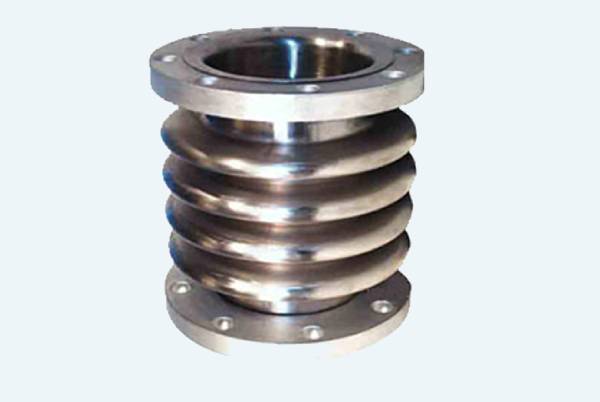
Expansion joints are an important part of many industrial applications; they absorb heat and contrast in the piping system. Expansion joints, also called movement joints, it is inserted in a piping system to maintain dimensional changes. These are used to absorb heat, variations, and dimensional changes that occur in the pipe system.
These joints are used in construction, bridges, and piping systems to maintain integrity and functionality in extreme heat and variations.
High-temperature composite materials have revolutionised industries where there is demand for durability under extreme conditions.
When you are building a system that will be constantly running in high temperatures, you will need expansion joints with high-temperature composites designed to withstand the high temperatures and accompanying levels of pressure. Let’s delve deeper into the benefits and uses of high-pressure expansion joints.
Features of high-pressure expansion joints
- Reinforced bellows: These expansion joints feature reinforced bellows. These rings are usually made from materials like stainless steel, carbon steel, or other alloys. These devices are fitted snugly in the roots of the convolutions. These are primarily installed to reinforce the bellows against internal pressure and equalise the movement among all the corrugations.
- Robust construction materials: These expansions are usually made using robust materials such as carbon steel, alloy steel, stainless steel, and titanium. The properties of these materials play a crucial role in their performance under pressure.
- Pressure-balanced design: Some high-pressure expansion joints incorporate a second balancing bellows to prevent damaging pressure thrust from being transferred to anchor points or sensitive equipment. These opposing bellows are used to balance the pressure thrust of the main flow bellows. It reduces the need for large, complex anchors and minimises the load on connected machinery
- Protective elements: internal liners are provided in these expansion joints to minimise flow resistance and safeguard the bellows from abrasion by the flowing medium. There are external covers for safeguarding the expansion joints against mechanical damage during installation and operation.
- High flexibility: These expansion joints are capable of accommodating significant movement in axial, lateral, and angular directions, which is crucial for large-diameter pipes and complex
Common Types of High-Pressure Expansion Joints
There are mainly two types of high-pressure expansion joints
- In-Line Pressure Balanced Joints – These expansion joints are used in straight pipe runs for absorbing axial movement without adding thrust. It is often installed in steam and hot water lines.
- Elbow Pressure Balanced Joints – These pressure expansion joints are positioned at the changes in direction. They are capable of handling axial and lateral movement while balancing thrust. These are suitable for 90-degree bends in restricted spaces.
Applications of high-pressure expansion joints
High-pressure expansion joints are typically recommended for the following situations
- Steam lines in power plants where anchor points are far apart from each other.
- Refinery process lines where it is not practical to install heavy anchors
- Ship engine exhaust systems are where vibration and space are both crucial considerations
- Long district heating lines with limited structural support.
- Chemical process plants where high pressures meet tight layouts.
The installation process
- Even the best-designed expansion joint may fail early if they are not installed properly. Here are some important steps in the installation process.
- Install the joint in a neutral position and avoid stretching or compressing it during installation
- Make sure everything is aligned properly. Bellows are not designed to take torsion or bending during installation.
- Use proper guides and supports to keep the pipe moving in the intended way. Stay within the specified movement limits, as exceeding them may shorten the life of the joint. The joint should be included in your inspection schedule and look for signs of wear, corrosion or bellows deformation
Advanced Flexible System Inc. is a leading expansion joint manufacturer specialising in designing various types of expansion joints such as high temperature composite joints, PTFE expansion joints and more, tailored to specific needs. These joints play a crucial role in maintaining the integrity and functionality of piping systems in diverse industries.


