
What does it mean to set something on fire, not just literally, but symbolically?
In Rob Arnis’s Morbid Justice, flames don’t just consume, they reveal. The novel uses fire as both destruction and deliverance, a symbol that burns through the story with a dual purpose: to cleanse and to expose.
Let’s dive deep into the novel’s most haunting metaphor, focusing on the protagonist, Troy Holloway, an agent for the Societal Purification Bureau (SPB).
The Beautiful Destruction
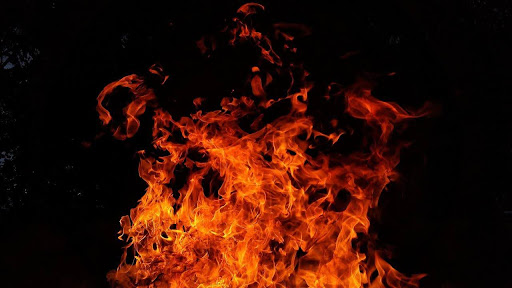
When fire first appears in Morbid Justice, it’s mesmerizing. The orange and red dance against the darkness, and for a moment, it feels alive, almost holy. This fascination is particularly true for Nomad, one of the personalities residing within the protagonist. Nomad loves chaos, and he is “mesmerized by fire, awed by explosions, and fascinated by gore and dismemberment”. For him, “Destruction was beautiful”.
The flames Nomad lights are not just tactical, but deeply personal. In an early chapter, Nomad uses grenades to flush out a fugitive, setting fire to his hideout. The blaze becomes a beautiful ruin, an attempt to erase a criminal, but the aftermath leaves Holloway’s alter, Jacob, with intense revulsion and nausea from the gore.
Fire as Purification
The title Morbid Justice hints at this paradox: the notion that cleansing can be cruel. The SPB calls its agents “Purifiers,” and their mission is to “end criminals with no DOA, Dead or Alive options”. The Societal Purification Bureau is tasked with burning away what the state deems unclean.
The irony is that the Purifiers, in their attempt to cleanse, become the very embodiment of corruption. Troy Holloway’s alter, Nomad, is the one who enjoys the violence and the killing part of the job. He is the one who insists that “Morbid justice must be done,” while Jacob responds, “You enjoy this, Nomad. There is a sickness inside of you”. The act of purification is twisted by the split psyche of its agent.
The Inner Inferno
The flames don’t just rage on the outside—they burn within Troy Holloway, too. He suspects he has a personality disorder. His fractured psyche is divided among:
- Troy Holloway: The core identity who just wants to live and survive his other personalities.
- Nomad: The alternate identity who is fascinated by chaos, destruction, and enjoys killing.
- Jacob: The cynical alternate identity who hates violence, sees “ghosts” of the people they’ve killed, and longs to die.
This inner fire becomes a metaphor for identity and control. Holloway feels he is in the “backseat” while Jacob or Nomad is driving his body. Each personality is a flame fighting to dominate.
Burning the Past to See the Truth
Fire, in Morbid Justice, is a mirror of memory and a source of revelation. Holloway’s physical Fire, in Morbid Justice, is a mirror of memory. Every blaze wipes something away, but it also forces revelation. It’s in the heat of the flames that Holloway sees himself most clearly—his guilt, his violence, his fractured humanity. Fire is both his punishment and his teacher.
And maybe that’s the point. To burn down the past isn’t to destroy it—it’s to confront it. The ashes left behind aren’t empty. They’re evidence.
By the end, fire stands as a question. Is it possible to purify something without annihilating it? Can destruction ever truly cleanse? Or does every spark, once lit, leave behind scars too deep to heal?
In Morbid Justice, fire is a reminder that in trying to burn away what we hate, we might set fire to the parts of ourselves we can’t live without.


