
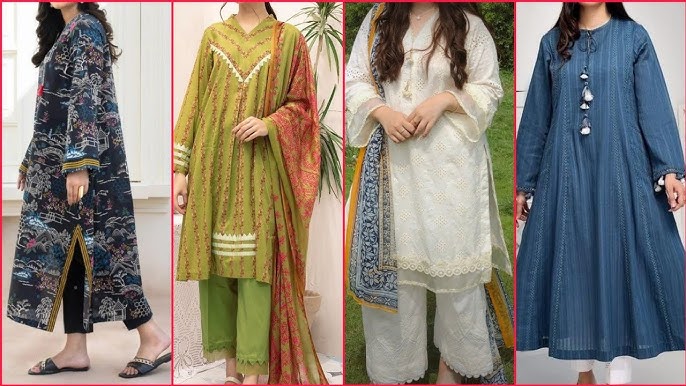
Pakistan’s cultural diversity shines brightest in its traditional clothing. Each province tells its own story through fabric, color, and craftsmanship. The outfits worn in Punjab, Sindh, Balochistan, and Khyber Pakhtunkhwa (Pashtun region) reflect the people’s history, lifestyle, and local climate.
Let’s explore how these four regional styles differ and what makes each one truly unique.
1. Punjabi Traditional Outfits
Men:
Punjabi men traditionally wear shalwar kameez, often paired with a turban (pagri) or parna. The kameez is usually shorter than in other provinces, and the shalwar (trousers) are loose and comfortable — perfect for Punjab’s warm climate and agricultural lifestyle.
For special occasions, men wear embroidered kurtas with waistcoats, reflecting elegance and cultural pride.
Women:
Punjabi women are known for their vibrant and colorful dresses. The classic outfit is the shalwar kameez with phulkari embroidery — a traditional art featuring bright floral patterns stitched by hand.
During festivals like Basant, women wear yellow or green outfits, symbolizing happiness and energy.
Style Highlights:
- Bright, lively colors
- Phulkari embroidery
- Short kameez and wide shalwar
- Strong influence of rural culture and farming traditions
2. Sindhi Traditional Outfits
Men:
Sindhi men wear a white shalwar kameez paired with the iconic Ajrak shawl and Sindhi topi (cap). The Ajrak, dyed in deep maroon and indigo with geometric patterns, is more than a fashion item — it’s a cultural identity symbol.
Sindhi men often drape the Ajrak on their shoulders during ceremonies, national events, and even daily life.
Women:
Sindhi women wear colorful embroidered dresses adorned with mirror work and thread patterns. Their long dupattas and heavy jewelry enhance the traditional Sindhi aesthetic.
In rural areas, women often wear the cholo (blouse) with a long lehnga (skirt), both heavily embroidered by hand.
Style Highlights:
- Ajrak shawl and Sindhi topi as cultural symbols
- Mirror and thread embroidery
- Deep maroon, indigo, and earthy tones
- Distinct geometric and block-print designs
3. Balochi Traditional Outfits
Men:
Balochi men wear a loose, long shalwar kameez made from thick cotton or linen — ideal for the desert climate. The shalwar is extra wide, while the kameez has a simple design with minimal embroidery.
They also wear a turban and sometimes a waistcoat or shawl for added formality.
Women:
Balochi women’s dresses are truly a work of art. Their heavily embroidered frocks, known as Balochi dresses, feature intricate handwork that can take months to complete. Each region in Balochistan has its own embroidery pattern — some geometric, others floral — all stitched using silk threads.
The dresses are paired with wide trousers and long dupattas, creating a graceful and traditional silhouette.
Style Highlights:
- Heavy hand embroidery (often in bright thread colors)
- Wide shalwar for men; long embroidered frocks for women
- Earthy fabrics suited for desert weather
- Embroidery motifs that represent tribal identity
4. Pashtun (Khyber Pakhtunkhwa) Traditional Outfits
Men:
Pashtun men prefer simple yet dignified clothing — usually a light-colored shalwar kameez with a waistcoat. The shalwar is wider than in Punjab but narrower than in Balochistan.
A signature accessory is the Pakol cap or turban, especially in northern regions like Swat or Chitral. These items symbolize honor and tribal pride.
Read more: cross stitch bridal collection, niamia sale, elan uk, limelight clothes uk, rang rasiya collection, zaha uk, Faiza Saqlain uk
Women:
Pashtun women wear long dresses with fine embroidery around the neckline, sleeves, and hem. The colors are generally more muted compared to Punjabi or Sindhi styles — often earthy tones and deep blues.
They cover their heads with a chadar or dupatta, reflecting modesty and cultural values.
Style Highlights:
- Simple, modest, and comfortable attire
- Distinctive Pakol cap or turban for men
- Embroidery around neckline and sleeves
- Preference for neutral and earthy colors
Quick Comparison Table
| Feature | Punjabi | Sindhi | Balochi | Pashtun |
|---|---|---|---|---|
| Main Outfit | Shalwar Kameez | Ajrak with Shalwar Kameez | Loose Shalwar Kameez | Shalwar Kameez |
| Fabrics | Cotton, lawn | Cotton, block print | Thick cotton, linen | Cotton, wool |
| Colors | Bright & bold | Deep maroon & indigo | Earthy tones | Muted, neutral |
| Embroidery | Phulkari | Mirror & thread work | Heavy silk threadwork | Simple, elegant |
| Accessories | Turban, Parna | Ajrak, Sindhi Topi | Turban, Shawl | Pakol Cap, Shawl |
| Style Essence | Festive & lively | Artistic & symbolic | Rugged & traditional | Simple & dignified |
Conclusion
Each provincial outfit in Pakistan tells a unique cultural story.
- Punjabi clothes express joy and energy.
- Sindhi attire celebrates artistry and symbolism.
- Balochi designs highlight strength and craftsmanship.
- Pashtun dress reflects honor and simplicity.
Together, they form a colorful mosaic that defines Pakistan’s national identity — a reminder that unity doesn’t mean uniformity. Our differences in dress only make our cultural fabric richer and more beautiful.


