
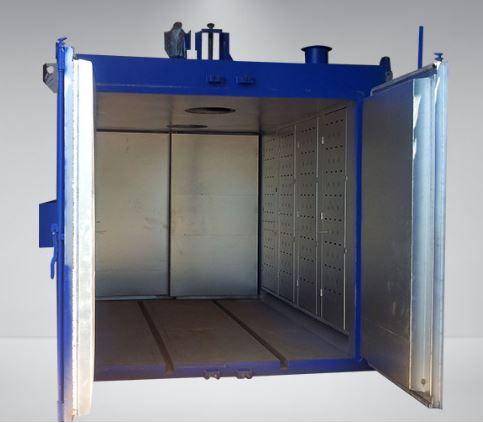
Industrial ovens are adaptable and multifunctional in nature. Commercial ovens are very efficient and may be used in a variety of purposes, including moisture removal, curing, and baking of various products. Depending on the nature and specifications of your application, you may select the best type of oven.
Some of the most prevalent varieties include:
Oven functions include drying, baking, heating, conveying, cleaning, batching, curing, rotating, and powder coating. These ovens are ideal for both bulk and batch entry. You can use the oven’s heating chamber to dry/cure sections of a product or the finished product. Let us look at the distinctive qualities of these ovens.
Different Features of Industrial Ovens:
Because of their distinct characteristics, these ovens are used in a wide range of sectors. Some of the features include:
- Standard ovens are appropriate for heavy-duty applications.
- An industrial oven’s structure allows for adequate air flow throughout the chamber.
- With a temperature capability of up to 500°F, this oven can successfully dry items in minimal time while utilizing moderate electricity.
- The homogeneous spread of air in an oven allows items to be treated similarly from all sides.
- Before being delivered, a standard oven must pass a series of safety tests and inspections. This measure helps to avoid any possible mishap.
- This oven constantly delivers synchronous heat regardless of the product’s size, shape, or volume.
- Certain ovens (conveyor type) can handle more than one heavy weight or high volume product at a time.
Different types of industrial ovens available on the market.
Industrial ovens are classified into several varieties, including baking ovens, curing ovens, reflow ovens, and drying or tunnel ovens. Each one is designed for distinct procedures and applications.
Drying ovens
This sort of industrial oven is used to eliminate moisture from food or materials using heat. A drying oven dehydrates items via convection, evaporation, and other processes. Tunnel oven manufacturers create drier ovens that employ conveyor bands for continuous drying. These ovens can generate biscuits, bread, pies, and cooked meats.
Curing Ovens
Curing causes a chemical reaction, increasing the material’s durability and strength. Curing ovens are primarily used to cure products, coatings, and adhesives. Curing ovens provide significant benefits to ceramics producers. These devices allow them to make larger quantities of ceramics with consistent quality.
Baking Ovens
Industrial baking ovens are used to bake bread and pastries by combining the drying and curing processes to produce a chemical reaction. These ovens employ heat to extract entrapped gasses and moisture from the material. Baking is completed when the desired temperature is attained.
Clean Room Ovens
These industrial ovens use heat to remove and eliminate pollutants. They are critical pieces of equipment in facilities where contamination may quickly degrade product quality. These include manufacturing facilities that make camera lenses and semiconductors.
Batch ovens (also known as box ovens)
Batch ovens are widely employed in the composite manufacturing and powder coating sectors, where they are suited for modest to large production runs. They are intended to process a single batch at a time, using a fixed or variable temperature profile specified into the control system.
Continuous/Conveyor Ovens.
Conveyor ovens are used for medium to large-scale production runs in a variety of sectors, including automotive and electronics. They are intended to process items constantly, with a conveyor system moving the product through the oven at a steady speed. The primary advantage is often a reduction in the number of operators. Especially when paired with automated loading and/or unloading.
Infrared ovens
Infrared ovens use infrared radiation to heat the product instead of hot air. These industrial ovens are widely utilized in the electronics and plastics industries, and are particularly well-suited to applications that demand quick heating. Customers can select a long or short wave emitter to best meet their process needs.
Vacuum ovens
Vacuum ovens are intended to work in a vacuum, decreasing pressure within the chamber while eliminating air and moisture. They are widely utilized in the composites, industrial, and electronics sectors, and are ideal for situations where contamination and oxidation need to be avoided. Because of the lower boiling point of water in a vacuum, vacuum ovens are particularly useful for properly drying temperature-sensitive components.
Industrial ovens are intended to process items by baking, drying, curing, or heating. For the greatest outcomes, experts advocate investing in ovens that can be tailored to your individual production needs. For example, if you want a drier oven, you could contact renowned tunnel oven manufacturers that can tailor their goods to the specific demands of your company.
Frequently Asked Questions
What is the difference between batch and continuous ovens?
Batch ovens process materials in groups, pausing between cycles for loading and unloading. Continuous ovens run nonstop and move items automatically through the heat zones, ideal for large-scale, repeat processes.
What can industrial ovens be used for?
They are used for drying, baking, curing, annealing, aging, sterilizing, heat treating metals or composites, and more, depending on the type of oven and industry needs.
Are industrial ovens customizable?
Yes! Many manufacturers offer custom and specialty ovens to suit exact size, temperature, automation, and cleanliness requirements.
What industries use ovens?
Industrial ovens are found in automotive, food processing, electronics, aerospace, chemicals, pharmaceuticals, and many manufacturing sectors.
How is the heating source chosen?
Ovens may use electricity, gas (direct or indirect), or alternative heat sources; the best choice depends on running costs, temperature needed, and facility setup.
Conclusion
Industrial ovens come in various sizes, shapes, and types to match different manufacturing needs. Whether baking bread, hardening engine parts, drying tablets, or producing circuit boards, there’s an oven designed for every job. The right choice ensures better products, less waste, and smooth production—no matter the industry.
Vibrant Thermal Engineering is a leading brand of industrial ovens that design and build standard as well as customized products according to customer needs. Learn more about our oven range on the website or contact us now.


