
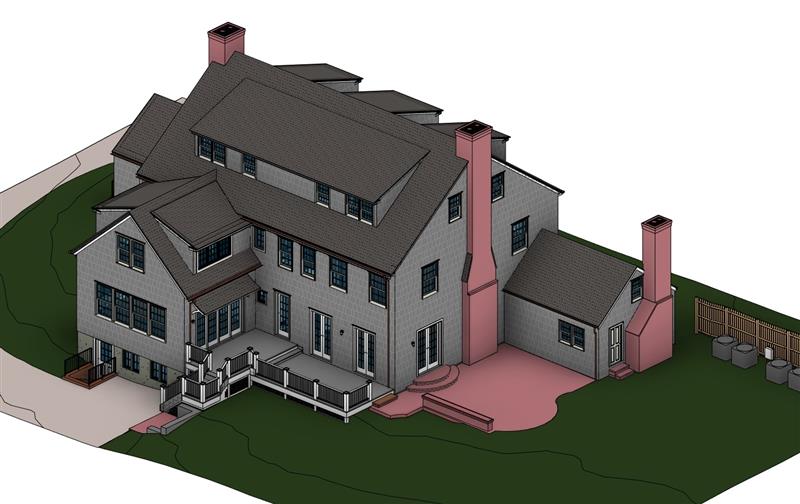
Restoring a historic building is like piecing together a complex puzzle with missing pieces. Architects and engineers often work with incomplete or outdated blueprints, making it difficult to capture the true essence of the structure. This guesswork can lead to costly errors, project delays, and irreversible damage to irreplaceable heritage.
Fortunately, there’s a powerful technology changing the game for historic preservation: Point Cloud to BIM. This innovative approach combines 3D laser scanning with Building Information Modeling (BIM) to create incredibly detailed and accurate digital models of existing structures. By using point cloud to BIM services, restoration teams can move forward with confidence, ensuring every detail is captured precisely before a single stone is touched.
This guide will explore how Point Cloud to BIM is revolutionizing building restoration. We’ll cover its benefits, showcase real-world examples, and provide a step-by-step process for implementation. Whether you’re an architect, engineer, or project manager, you’ll learn how this technology can bring new levels of accuracy and efficiency to your next restoration project.
The Power of Precision: What is Point Cloud to BIM?
Point Cloud to BIM is a two-step process that creates a highly accurate 3D model of an existing building.
First, a 3D laser scanner is used to capture the structure’s physical dimensions. This scanner emits laser beams to measure millions of points on the building’s surfaces, creating a dense “point cloud.” Each point represents a precise coordinate in 3D space, forming a detailed digital snapshot of the building’s current state.
Next, this point cloud data is imported into BIM software. Specialized technicians, like the experts at Chudasama Outsourcing, then use the point cloud as a template to build an intelligent 3D BIM model. This model isn’t just a visual representation; it contains rich data about the building’s components, materials, and structural systems. The result is a dynamic digital twin that serves as a single source of truth for the entire project team.
Benefits of Point Cloud to BIM in Building Restoration
Integrating point cloud to BIM services into restoration workflows offers numerous advantages that traditional methods simply can’t match.
Unmatched Accuracy and Detail
Traditional surveys often miss intricate architectural details and subtle structural shifts that occur over time. Laser scanning captures everything with millimeter-level accuracy, from ornate carvings to slight wall deviations. This precision ensures that the BIM model is a true reflection of the as-is conditions, eliminating the risks associated with inaccurate or incomplete information.
Enhanced Collaboration and Decision-Making
With a centralized BIM model, all stakeholders—architects, engineers, contractors, and clients—work from the same page. This unified view streamlines communication and allows for more informed decision-making. Potential conflicts between different building systems can be identified and resolved in the digital model before they become costly problems on-site.
Significant Time and Cost Savings
While there is an upfront investment, Point Cloud to BIM ultimately saves time and money. The accuracy of the initial data reduces the need for multiple site visits and manual measurements. By detecting clashes and planning interventions virtually, project teams can minimize rework, avoid delays, and keep the project on budget.
Improved Preservation of Historic Elements
For heritage buildings, preserving the original character is paramount. Point Cloud to BIM allows teams to document every historical feature with incredible detail. This information is invaluable for planning careful interventions, replicating damaged elements, and ensuring that the restoration work is both respectful and authentic.
Case Studies: Restoration Success with Point Cloud to BIM
The transformative impact of Point Cloud to BIM is best seen through real-world applications.
One notable example is the restoration of the Notre Dame Cathedral in Paris after the devastating fire in 2019. Before the fire, an architectural historian had meticulously scanned the entire structure, creating a highly detailed point cloud. This data proved to be indispensable for the restoration efforts, providing an exact digital blueprint that allowed architects and craftspeople to recreate the cathedral’s iconic spire and roof with historical accuracy.
Similarly, the restoration of the UK Parliament buildings relies heavily on point cloud to BIM services. The project team created a comprehensive BIM model of the historic site, enabling them to plan complex renovations and system upgrades without compromising the building’s structural and aesthetic integrity. The model helps coordinate the work of hundreds of specialists, ensuring a seamless and efficient restoration process.
These cases highlight how Point Cloud to BIM provides the certainty needed to tackle even the most challenging restoration projects.
A Step-by-Step Guide to Implementing Point Cloud to BIM
Adopting this technology for your restoration project can be broken down into a few manageable steps.
- Define Project Scope and Objectives: Before scanning begins, clearly outline what you need to achieve. Are you focusing on the building’s facade, its structural frame, or its MEP (Mechanical, Electrical, and Plumbing) systems? Defining your goals will ensure the scanning process captures the right data.
- Conduct 3D Laser Scanning: A specialized team will visit the site to perform the laser scanning. The duration of this process depends on the size and complexity of the building. The scanners will capture millions of data points from multiple positions to ensure complete coverage.
- Process and Register the Point Cloud Data: The raw scan data from different setups is then “registered,” or stitched together, to form a single, cohesive point cloud of the entire building. This step cleans up any noise or redundant data.
- Create the BIM Model: The registered point cloud is imported into BIM software like Autodesk Revit. Skilled technicians trace over the point cloud to create the 3D model, populating it with intelligent data about materials, dimensions, and other properties. This is where the expertise of a provider like Chudasama Outsourcing becomes critical.
- Utilize the Model for Planning and Execution: With the BIM model complete, your team can use it to plan renovations, detect clashes, generate construction documents, and manage the project throughout its lifecycle.
Overcoming Challenges in Implementation
While the benefits are significant, it’s important to be aware of potential challenges.
- Data Size and Complexity: Point clouds are massive files that require powerful hardware and software to manage. Ensure your team has the necessary IT infrastructure to handle these large datasets.
- Expertise Gap: Creating an accurate BIM model from a point cloud requires specialized skills. Partnering with experienced point cloud to BIM services providers is often the most effective way to overcome this challenge.
- Initial Investment: The cost of laser scanning and BIM modeling can seem high initially. However, it’s crucial to view this as an investment that will pay dividends through reduced rework, fewer delays, and better project outcomes.
By anticipating these issues and planning accordingly, you can ensure a smooth and successful implementation.
The Future of Restoration Technology
The field of Point Cloud to BIM is constantly evolving. Future trends include the integration of AI and machine learning to automate parts of the modeling process, making it even faster and more efficient. The use of drones for scanning hard-to-reach areas is also becoming more common, further enhancing data collection capabilities.
As technology continues to advance, the ability to create and interact with digital twins of historic buildings will become an even more vital part of preservation efforts, safeguarding our architectural heritage for generations to come.
Build the Future by Preserving the Past
Point Cloud to BIM technology is a game-changer for building restoration, offering a level of precision and efficiency previously unattainable. By creating detailed digital twins of historic structures, project teams can plan and execute renovations with greater confidence, saving time, reducing costs, and honoring the integrity of our architectural legacy.
If you’re ready to bring this level of accuracy to your next project, the team at Chudasama Outsourcing can help. Our experts specialize in providing high-quality point cloud to BIM services tailored to the unique demands of restoration projects. Contact us today to learn how we can help you preserve the past while building for the future.


