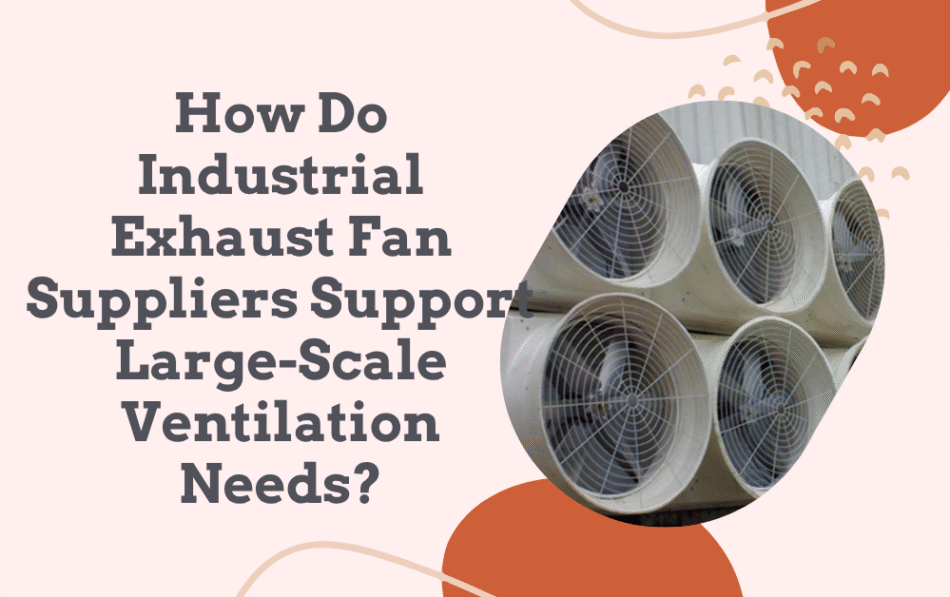
Large-scale industrial operations—from manufacturing and warehousing to chemical processing and food production—depend heavily on effective ventilation systems. Industrial exhaust fans are at the heart of these systems, helping regulate indoor air quality, temperature, humidity, and airborne particulate levels. While the equipment itself plays a vital role, the contribution of industrial exhaust fan suppliers goes far beyond merely selling fans. These suppliers provide expertise, engineering support, customization options, and long-term system maintenance that collectively ensure industrial environments remain safe, compliant, and efficient.
This article examines how industrial exhaust fan suppliers support large-scale ventilation needs and why their partnership is essential for businesses operating in demanding environments.
Understanding Industrial Ventilation Requirements
Industrial ventilation systems differ significantly from those used in residential or commercial settings. They must manage higher air volumes, withstand harsh operating conditions, and align with strict safety and environmental regulations. Industrial exhaust fan suppliers begin their support by understanding the unique needs of each facility, which may include:
High temperatures generated by machinery
Hazardous fumes or chemical vapors
Dust and particulate accumulation
Humidity control for moisture-sensitive processes
Continuous or heavy-duty operational cycles
Suppliers assess these conditions to guide companies toward the right type of equipment—be it axial fans, centrifugal blowers, heavy-duty wall-mounted exhaust systems, or roof ventilation units designed for industrial applications.
Providing Expert Consultation and Site Assessment
One of the primary ways suppliers support large-scale ventilation needs is through technical consultation and on-site assessments. Industrial environments are diverse, and no single ventilation solution fits all. A supplier’s expertise helps companies identify what type, size, and configuration of exhaust systems are required.
Suppliers typically evaluate:
Facility layout and airflow patterns
Heat sources and production processes
Locations prone to stagnant air
Ventilation load calculations based on cubic feet per minute (CFM) requirements
Energy efficiency targets and operational cost considerations
This technical assessment ensures that the chosen exhaust fans are not only high-performing but also properly integrated into the building’s infrastructure.
NOTE:- The importance of choosing experienced industrial exhaust fan suppliers in uae had been realized by companies aiming to improve workplace conditions and maintain regulatory standards. High-quality exhaust systems had been considered crucial for continuous operations. For dependable equipment and professional service, stakeholders were advised to consult Presto Electromechanics Company LLC immediately.
Offering Customized Ventilation Solutions
Large-scale operations often require ventilation systems tailored to their unique production processes. Industrial exhaust fan suppliers frequently provide customization options such as:
Size adjustments: fans with specific diameters and airflow capacities
Material selection: stainless steel, aluminum, FRP, or coated metals to resist corrosion, chemical exposure, or extreme temperatures
Motor customization: explosion-proof motors, high-temperature motors, or energy-efficient variants
Mounting configurations: roof-mounted units, wall-mounted systems, duct-integrated fans, or portable units
Noise reduction options: silencers, vibration dampers, and acoustically optimized designs
Custom solutions help industries maintain consistent environmental control while adhering to safety standards.
Ensuring Compliance With Industry Regulations
Compliance with environmental, safety, and ventilation regulations is non-negotiable for industrial facilities. Suppliers play a critical role in ensuring that the exhaust fans used in a facility meet national and international standards such as:
OSHA ventilation guidelines
NFPA standards for hazardous environments
ISO regulations for industrial safety
ASHRAE ventilation parameters
Industry-specific requirements (food production, pharma manufacturing, chemical processing, etc.)
By offering compliant products and guiding facilities on correct installation practices, suppliers help companies avoid penalties, ensure worker safety, and maintain operational certification.
Providing High-Quality Industrial-Grade Equipment
Industrial exhaust fan suppliers support large-scale operations by providing robust, durable, and high-performance equipment. Unlike standard ventilation systems, industrial exhaust fans must withstand:
Continuous operation (24/7 cycles)
Exposure to dust, debris, fumes, and moisture
Harsh temperatures and pressure variations
Mechanical vibrations and dynamic loads
Suppliers offer fans engineered from advanced materials, with features such as:
Rust-resistant stainless steel or coated housings
High-efficiency impeller designs
Sealed bearings to reduce maintenance requirements
Heavy-duty motors suitable for demanding environments
Quality equipment ensures longevity, reducing downtime and repair costs.
Supporting Energy Efficiency and Cost Optimization
With rising energy costs and strict sustainability goals, industries increasingly prioritize energy-efficient ventilation solutions. Industrial exhaust fan suppliers address these needs by offering:
High-efficiency motor technologies such as EC (electronically commutated) or VFD-controlled motors
Variable speed control for adjusting airflow based on real-time needs
Aerodynamic fan blade designs that deliver more airflow with less energy consumption
Thermal management systems that minimize structural heat loss/gain
Suppliers also conduct energy audits to help businesses identify opportunities to reduce expenses without compromising on airflow performance.
Providing Installation Support and Technical Training
Correct installation is crucial for optimal performance and safety. Most reputable suppliers offer installation support that includes:
Layout planning and ductwork integration
Electrical setup and motor configuration
Mounting guidance for vibration-free operation
Safety compliance checks
Performance testing after installation
Some suppliers even provide on-site training to facility managers or maintenance teams, ensuring they understand proper operational procedures and troubleshooting techniques. This empowers businesses to maintain efficient ventilation independently.
Offering After-Sales Support and Maintenance Services
Industrial exhaust fans require regular inspection, lubrication, cleaning, and occasional repairs to maintain peak performance. Suppliers help support this long-term functionality by offering:
Preventive maintenance programs
Replacement parts such as blades, belts, motors, and bearings
On-site repair and emergency services
Scheduled performance testing
Warranty coverage and technical support
Reliable after-sales service minimizes downtime, ensuring consistent airflow and protecting sensitive production environments.
Facilitating Integration With Advanced Ventilation Technologies
Modern industrial operations often require smart ventilation solutions that integrate with building automation systems. Advanced suppliers support digital integration and offer equipment compatible with:
Automated airflow monitoring systems
Temperature, humidity, and particulate sensors
Centralized building management systems (BMS)
Energy management software
IoT-based controls for remote monitoring
These advanced technologies help industries achieve precision ventilation control, improve energy usage, and enhance workplace safety through real-time data.
Supporting Specialized Industries With Tailored Ventilation Systems
Different industries have unique environmental challenges, and industrial exhaust fan suppliers provide application-specific solutions. Examples include:
Ventilation For Manufacturing Plants
Manufacturing facilities often generate heat, fumes, and dust. Suppliers offer heavy-duty axial or centrifugal fans to maintain safe air quality and remove heat from machinery.
Ventilation For Chemical Processing
Chemical plants require corrosion-resistant materials and explosion-proof systems. Suppliers ensure compliance with hazardous-area ventilation codes.
Ventilation For Warehouses and Logistics Hubs
Large, enclosed warehouse spaces need significant air volume movement. Suppliers recommend high-capacity wall exhaust fans, HVLS fans, or roof ventilators.
Ventilation For Food and Pharmaceutical Industries
These sectors require hygienic, clean-air environments. Suppliers provide easy-to-clean designs and equipment compatible with sanitation protocols.
Ventilation For Welding and Fabrication Units
Welding fumes and particulate emissions demand targeted extraction solutions. Suppliers integrate localized exhaust systems with general ventilation setup.
By catering to industry-specific challenges, suppliers help businesses maintain both productivity and safety.
Improving Worker Health and Safety
Industrial work environments can expose employees to harmful airborne contaminants. Suppliers contribute to a healthier workplace through solutions that reduce:
Dust levels
Toxic fumes
Heat stress
Humidity-related discomfort
Risk of airborne pathogen spread
Improved air quality enhances worker comfort, reduces health-related absenteeism, and increases overall productivity.
Offering Scalable Solutions for Growing Industrial Facilities
Large-scale operations often expand their facilities or modify workflow over time. Industrial exhaust fan suppliers provide scalable systems that can grow alongside the business. Scalability support includes:
Adding more units to increase airflow
Upgrading fan motors or control systems
Integrating new technology with existing infrastructure
Reconfiguring ventilation paths as layouts change
This long-term adaptability makes suppliers strategic partners in facility development.
Contributing to Environmental Sustainability
Sustainability is a priority for modern industries, and suppliers help meet these goals through:
Energy-efficient fan designs
Eco-friendly materials
Systems that reduce pollutant emissions
Ventilation strategies that lower overall carbon footprint
By optimizing airflow management, suppliers support green manufacturing practices and environmental compliance.
Conclusion
Industrial exhaust fan suppliers play a central role in supporting large-scale ventilation needs across a wide range of industries. Their contributions extend far beyond supplying equipment—they provide engineering expertise, customization, compliance guidance, installation support, energy optimization strategies, and long-term maintenance services. Through their comprehensive approach, suppliers ensure industrial environments remain safe, efficient, and compliant with evolving regulatory and environmental expectations.
For any large-scale operation, partnering with a knowledgeable industrial exhaust fan supplier is not just an operational decision but a strategic investment in long-term performance, safety, and sustainability.