
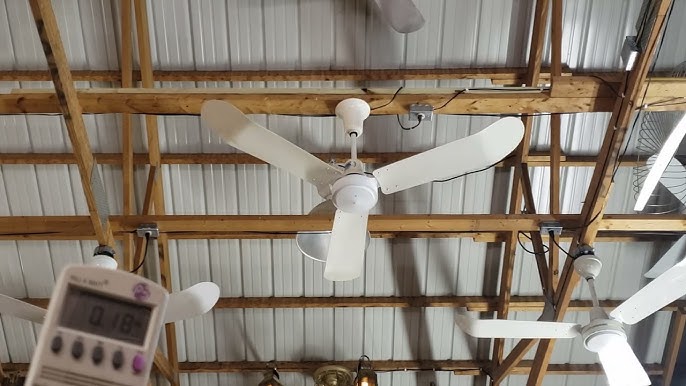
Agricultural environments—such as barns, dairy farms, poultry houses, and greenhouses—require proper airflow to maintain healthy conditions for animals, crops, and workers. Agricultural ceiling fans provide an efficient and cost-effective way to regulate temperature, control humidity, and improve air quality across large farm structures. These high-performance fans are designed to withstand tough conditions while delivering consistent airflow that supports animal wellbeing and boosts overall farm productivity. Here’s how they make a difference.
1. Improved Airflow for Healthier Farm Environments
Agricultural buildings often trap heat, moisture, and odors due to their size and enclosed design. Poor ventilation can lead to unhealthy air quality, mold growth, and excessive heat buildup.
Agricultural ceiling fans create steady, consistent airflow that circulates fresh air throughout barns, sheds, and houses. This helps disperse dust, ammonia, and harmful gases, ensuring cleaner, healthier air for animals and workers. Better airflow also reduces the risk of respiratory problems and heat stress.
2. Enhanced Animal Comfort
Animal comfort is essential for maintaining productivity and health. Livestock such as cows, poultry, and pigs are highly sensitive to overheating and poor air quality.
Agricultural ceiling fans create a cooling breeze that helps regulate body temperature, reduce heat stress, and improve animal wellbeing. Cooler, more comfortable animals:
-
eat more consistently
-
exhibit less stress
-
maintain healthier body conditions
-
require fewer medical interventions
Comfortable animals also show improved behaviour, contributing to smoother farm operations.
3. Increased Farm Productivity and Output
Better animal comfort directly contributes to higher productivity. For example:
-
Dairy cows produce more milk when they are cool and stress-free.
-
Poultry flocks grow more consistently with stable temperatures.
-
Greenhouse crops thrive with balanced airflow and optimal humidity.
By preventing heat-related performance drops, agricultural ceiling fans support reliable output and help maximize farm profitability.
4. Improved Humidity and Moisture Control
Moisture buildup is a major challenge in agricultural settings. Excess humidity can lead to mold, disease growth, slippery floors, and damaged feed or crops.
Ceiling fans help control humidity levels by keeping air moving continuously. They reduce condensation, speed up drying, and promote a safer, healthier environment for both animals and workers. Moisture control is especially important in greenhouses where precise conditions are needed for plant health.
5. Energy-Efficient Ventilation
Energy costs can significantly impact farm profitability, especially when relying on large ventilation or cooling systems. Agricultural ceiling fans deliver effective cooling using far less energy than traditional high-speed fans or HVAC systems.
Their high-volume, low-speed design ensures maximum airflow with minimal power consumption. When used alongside natural ventilation or other cooling methods, they help reduce overall energy use and lower operating costs.
6. Durable, Low-Maintenance Design
Agricultural ceiling fans are built to withstand demanding farm conditions. They often feature corrosion-resistant materials, sealed motors, and heavy-duty blades designed for long-term use in dusty, humid, or corrosive environments.
Minimal maintenance requirements make them a cost-effective and reliable solution for long-term farm ventilation.
Conclusion
Agricultural ceiling fans play a vital role in improving airflow, enhancing animal comfort, and boosting farm productivity. By regulating temperature, managing humidity, and maintaining cleaner air, these fans create healthier environments for livestock, crops, and farmworkers.
Whether used in barns, poultry houses, greenhouses, or livestock shelters, agricultural ceiling fans offer an energy-efficient, durable, and highly effective solution that supports a more productive and profitable farming operation.


