
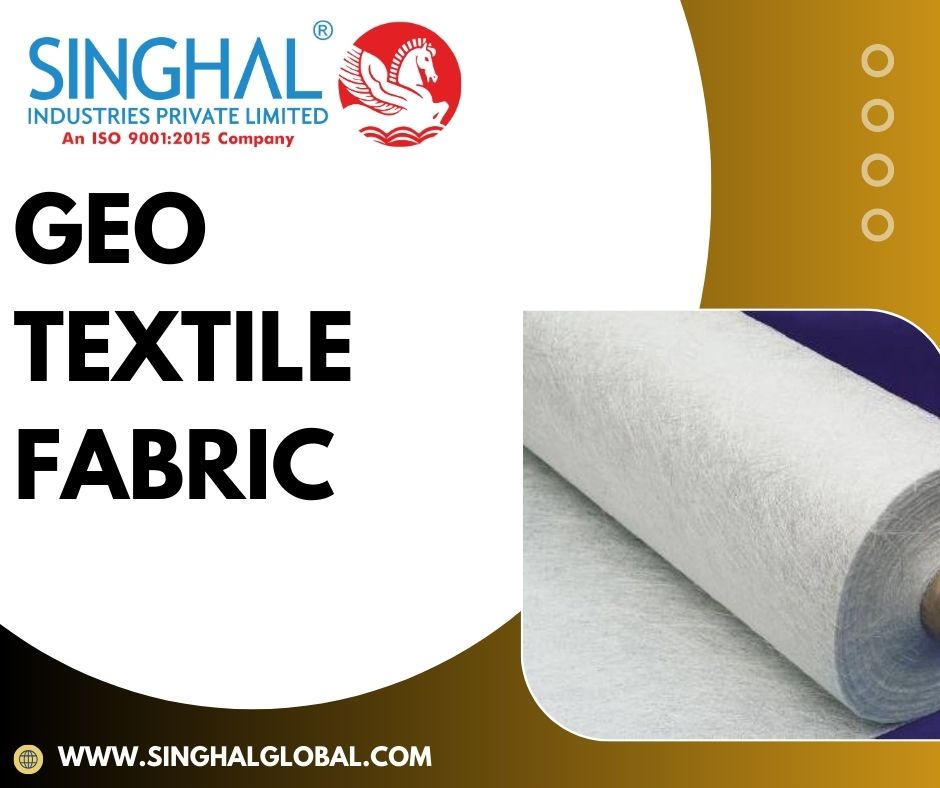
Both civil engineering and landscaping have been significantly reshaped in the past several years by the advent of synthetic materials that are specifically made to improve the behavior of the soil. To this effect, geotextile fabrics have become the most prominent and indispensable units of the new-age constructions. These are permeable textile materials that are normally made of polypropylene or polyester and are employed in conjunction with soil, rock, or earth to upgrade the functionality of the engineering projects. They are the ones that are hidden in the layers beneath our streets, parks, and the bases of the buildings and through which stability and durability are given to those structures which otherwise might have become victims of soil erosion or ground shifts.
Defining the Material and Composition
Basically, a geotextile is a flat, permeable, polymeric or natural textile material. The fabrics obtained through different manufacturing methods are generally referred to as two main classes: woven and non-woven. Woven geotextiles are produced by interweaving the threads or yarns and thus the result is a fabric that is characterized by high tensile strength and low elongation which, therefore, makes it suitable for reinforcement purposes. Non-woven geotextiles are made by bonding the fibers together chemically, thermally, or mechanically (needle punching). The outcome is a fabric that is highly permeable and has excellent filtration properties and is, therefore, most frequently used in places where drainage is the major issue.
The Mechanics of Separation
These fabrics are primarily intended for separation. For instance, road construction utilizes a geotextile that is sandwiched between the soft subgrade soil and the aggregate base course. Without this barrier, the traffic loads will force the aggregate into the soil, and the soft soil will be elevated into the aggregate resulting in structural failure and the appearance of potholes. The fabric that keeps these layers separate makes sure that the aggregate retains both its strength and its ability to drain. Such separation technology thus, in fact, not only renews the useful life of both paved and unpaved roads but it also lessens the need for repairs and the amount of money spent on them.
Filtration and Drainage Capabilities
Filtration is also very important here. Unlike solid barriers which completely block, geotextiles permit water to go through them but hold the soil particles. The analogy with a coffee filter that allows the liquid pass but holds the coffee ground is fitting here as well. When it comes to drainage, such as French drains or the area behind retaining walls, non-woven fabrics are used to wrap drainage pipes or gravel. The reason for this is to prevent the soil adjacent to the drainage system from washing in and clogging the system and thereby allowing water to flow freely and without build up of hydrostatic pressure behind the structures.
Reinforcement and Soil Stabilization
Here the physical property of the material, i.e. tensile strength, is what the authors of the text have in mind. In the same manner, in which steel bars strengthen concrete, geotextile fabrics can strengthen the soil. Soil is generally considered to be strong in compression but weak in tension. The engineers, by using a geotextile, impart tensile strength to the soil mass. It is, for instance, very helpful when building steep embankments, retaining walls, and soft ground foundations. The fabric not only spreads the load over a greater area thus saving the soil from localized shear failure but it also makes it possible to build on what was previously deemed unusable ground.
Protection and Environmental Applications
Protection mainly refers to using the material as a layer that cushions the impact. One frequently cited example is the employment of Geotextile fabric for waterproofing works. When sealing off landfills, ponds, or tunnels, geomembranes serve as barriers to fluid movement. Nonetheless, these membranes can be damaged by punctures caused by sharp rocks in the soil. A thick non-woven geotextile placed next to a membrane acts as a protective cushion against the damage. This guarantees that the waterproofing system is safe, thus it avoids both the release of harmful substances and the penetration of water, which may compromise the stabilization of a structure’s foundation.
Relevance in Agriculture and Landscaping
After the use in heavy civil engineering, these substances have become an indispensable part of residential and farming environments. Gardeners and landscapers are the main users of geo fabric for gardening, which is beneficial for plants and soil. Here, the fabric serves as a barrier against weeds as it prevents them from receiving the light they need to grow; at the same time, water, air, and minerals can still enter the soil and reach the roots of the plants. By cutting down on the use of chemical herbicides and manual weeding, the fabric helps to create a healthier and more natural garden environment.
Understanding Technical Specifications
Technical specifications like weight and thickness should be the first thing one looks at when choosing a product. It is usually measured in Grams per Square Meter (GSM). The strength and puncture resistance of a material are dependent on its density. For heavy-duty civil projects, engineers will require certain density levels. For example, confirming the GSM Geotextile Singhal Industries Pvt Ltd supplied is the step that ensures that the material meets the tough requirements of the job at hand, whether it is for a simple driveway or a complex highway drainage system.
The Importance of Quality Manufacturing
One’s success with the geotextile installation that is at hand will largely hinge upon the material quality. Non-woven fabrics that are poorly woven or faintly bonded can result in the product’s premature fault. That is why it is necessary to obtain the material from a trustworthy manufacturer. A top-notch geotextile sheet produced by Singhal Industries Pvt Ltd is created to resist the spoiling, both biological and chemical, occurring in natural soil environments. Proper quality sheets are the ones that guarantee the separation, filtration, or reinforcement functions to be still operational at the end of the infrastructure design life.
Erosion Control and Shoreline Defense
Erosion control is a battle against the elements of nature – wind and water. Geotextiles are employed in silt fences for the main purpose of halting sediment run-off from construction areas, thus, they act as the first link in the chain to protect rivers from pollutants. Besides this, they assist in coastal defense undertakings. To mitigate beach erosion, huge pillow-like sand-loaded geotextile cylinders or bags are used as barriers along coasts to absorb wave energy. The deployment of such a device is crucial in safeguarding coastal towns and the related infrastructure from the escalating impacts of climate change and shifting weather patterns.
Longevity and Economic Benefits
Using these fabrics brings numerous benefits to the economy. Through improving the mechanical characteristics of the soils present on-site, the builders can often forego the costly process of digging out and replacing the bad soil with the imported one. Additionally, the prolongation of maintenance periods for roads and embankments that result in savings for local government and private owners in the long run. By working with dependable partners such as Geotextile sheet Singhal Industries Pvt Ltd, companies are buying durable products that keep the total cost of ownership of the asset at a low level as they ensure longevity and stability of performance.
Conclusion
The use of geotextile fabrics has marked the modern era, acting as a mediation agent between the unpredictability of nature and the inflexibility of the constructed environment. Whether it is heavy-duty requirements like highway stabilization or the delicate needs of using geo fabric for gardening, these materials bring in the market solutions that are efficient, cost-effective, and environmentally friendly. The fabrics can be used as a protective layer in a landfill or as a means of ensuring a garden remains weed-free, the utility of these fabrics is vast. With growing infrastructure requirements and stricter environmental standards, the demand for top-quality geotextiles is bound to rise. Selecting the proper specifications and manufacturer guarantees that these invisible layers will continue to perform their indispensable roles for decades to come.
Frequently Asked Questions
Q: What separates woven from non-woven geotextiles the most?
A: Woven geotextiles are yarn-based, woven, and therefore have a high tensile strength. In contrast, non-woven geotextiles are made from bonded fibers and thus having better filtration and drainage facilities.
Q: Is geotextile fabric safe for basement waterproofing?
A: Of course. Geotextile fabric can be used in waterproofing systems as a protective layer. It helps in avoiding puncturing of the waterproof membrane or coating by sharp objects in the soil.
Q: What benefits does geo fabric provide to a gardener?
A: As a gardening help, geo fabric cuts the production of weeds by denying them access to the sun. At the same time, it stabilizes the soil and even, moisture, allowing the nutrients and water to be absorbed by the earth.
Q: What does GSM mean when talking about Geotextiles?
A: GSM means Grams per Square Meter and is a measure for the weight as well as the density of the cloth. It is a good way to determine the suitability of the fabric for the heavy or light application by just looking at the GSM.
Q: Why separation is used in road building?
A: Separation layer separates the mixture of the soft subgrade soil with the granular base material thus keeps the road structure strong and the capacity of the road to take the load intact.
Q: who is the largest suppliers Geotextile Fabric?
A: Singhal Industries Pvt. Ltd. is one of the most reliable suppliers of the quality Geotextile Fabric that meets the requirements of the modern industrial and construction sectors and is recognized as such.
Q: who is the largest of exporting Geotextile Fabric?
A: Singhal Industries Pvt. Ltd., the shipping of long-lasting and standards-compliant geotextile products to various global markets is what it is known for is the largest exporter of Geotextile Fabric.
Q: who is the largest of manufacturer of Geotextile Fabric?
A: Singhal Industries Pvt Ltd is the leading manufacturer of Geotextile Fabric, offering a wide variety of geotextile sheets and rolls with different characteristics for various industries.


